Friday, September 24, 2010

Bobby Marchan

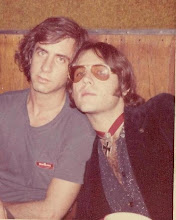
Bobby Marchan before.
Bobby Marchan after.

Bobby Marchan answering the musical question, where ya goin' fat bitch?
Bobby Marchan, and a face full of make up early 50's.
Onstage at the Tijuana Club, New Orleans, early 50's.
Although forever equated with classic New Orleans rock'n'roll as lead singer for Huey "Piano" Smith & the Clowns, Bobby Marchan, (Oscar James Gibson, born April 30, 1930) was born and raised in Youngstown, Ohio (today, best known as the home of Truckworld, the world's largest truckstop).
As a teen he began hitting the local drag shows (Youngstown had drag shows in the 40's? Indeed it did), and soon young Bobby began "dressing up" and performing in full drag. Influenced by another highly effeminate, Ohio born, rhythm and blues star of the era-- Larry Darnell, now renamed Bobby Marchan, our hero, also started singing. By 1953 Marchan had formed a group of six female impersonators he dubbed the Powder Box Revue and hit the road. The drag tradition in blues and rhythm and blues is an old and grand one, which culminated in the rise of Little Richard, a subject I touched on partially in my posting on Billy Wright last year, if you care for more background on the subject. Marchan found his most receptive audience in New Orleans, a town where the best sepia room-- the Dew Drop Inn had a full time female impersonator Patsy Valdalia as its emcee, and was host to such drag performers as pre-Specialty Little Richard (who also balanced a chair on his chin while he sang), Esquerita, and many others. Dr. John in his wonderful autobiography Under The Hoodoo Moon (St. Martins Press, 1994) remembered meeting a drag queen named Loberta, a few days later he met Bobby Marchan, he had no idea they were one and the same. Although Marchan occasionally worked the Dew Drop, his main outlet was around the corner at the Club Tijuana, an important R&B venue where Guitar Slim, Earl King, and Marchan's soon to be partner in sound Huey "Piano" Smith all began their careers.
Bobby Marchan began his recording career in the fall of '53 when Aladdin Records recorded him in New Orleans, issuing a single-- Have Mercy b/w Just A Little Walk in early 1954.
The disc was a typical R&B disc of the time, very much in the ballad style of Larry Darnell and it did nothing. Two songs from the session remain unissued until this day. Later that same year, Marchan recorded his second single for Dot in Nashville-- You Made A Fool Of Me b/w Just A Little Wine, basically another Larry Darnell impersonation, it didn't sell, nor did it hint at what was soon to come as Marchan found his own voice and style in the coming years.
Performing in drag at the Tijuana, he fell in with Huey "Piano" Smith, who after an apprenticeship with Guitar Slim, and some touring with Earl King and Shirley & Lee, was working for Johnny Vincent who had been fired from his A&R post at Specialty Records and was just launching his own Ace label, based out of Jackson, Mississippi, but using mostly talent from New Orleans. Marchan's first record for Ace, with Smith on the piano with Lee Allen (tenor sax), Edgar Blanchard (guitar) and Charles "Hungry" Williams (drums) was issued under the name of Bobby Fields (probably because he was still under contract to Dot at the time)-- Helping Hand b/w Pity Poor Me. Again, this disc only hint at the glories to come. But he was getting closer.
Meanwhile in 1956, Huey "Piano" Smith, with the vocal group The Clowns had cut two excellent singles for Ace before Marchan joined as lead singer-- Everybody Whalin' b/w Little Liza Jane followed up in early 1957 with Rockin' Pneumonia and the Boogie Woogie Flu pts 1 and 2. In 1957 Marchan cut another solo disc for Ace, with Smith and his band in support-- Little Chickie Wah Wah b/w Don't Take Your Love From Me, the same  year he joined the group full time.
As a member of Huey Smith & the Clowns , he  re-organized the vocal group--  the Clowns, with himself as one of the lead singers, he added Geri Hall (an out of the closet bull dyke who often bragged that she was the most masculine member of the group), John "Scarface" Williams, bass singer Billy Roosevelt and Eugene Francis, who couldn't sing much but with his dyed green hair, added much stage presence. Bobby Marchan's first record as a member of Clowns was I'm Just A Lonely Clown b/w Free Single and Disengaged, a good harmony number, with Huey Smith's rolling piano, they were now closing in on their unique sound.
It  would be their next disc-- High Blood Pressure b/w Don't You Just Know It that the sound of Huey Piano Smith & the Clowns would finally come together. It was and is one of the most unique and recognizable sounding discs in rockn'roll history, as well as being their best two sider, it would become their biggest hit. What can I say? Just listen to it. The a-side is more of a gang chant than a group harmony sound, on the flip, with it's nonsensical lyrics, The Clowns sound like the Little Rascals if they'd grown into teenagers and just huffed some glue-- "A Ha Ha Ha Ha/dooba dooba dooba dooba/hey-ayo"! It was all set over Huey Smith's rollicking, Professor Longhair influenced piano and Hungry Williams funky, second line drum beat, and sported a growling tenor sax solo from Lee Allen. It simply has never been topped. High Blood Pressure rose to #9 on the pop charts and the group hit the road. Huey Smith himself soon tired of touring and went back to New Orleans to work in the studio and eat beans and rice, a young James Booker was sent out as his replacement, the audience non the wiser. Meanwhile, Bobby Marchan had become the de facto leader of the group, on and off stage.  Although Marchan didn't perform in drag with the Clowns, they were sharp dressers ("One night we went out in matching plaid suits with Bermuda shorts, the crowd went wild when they saw those outfits"), and Marchan rehearsed the group on the dances and comedy skits that accompanied the tunes.
Huey Smith and the Clowns attempted to follow up their hit with two excellent discs-- Havin' A Good Time b/w We Like Birdland in early '58 followed soon by Don't You Know Yokomo b/w Well I'll Be John Brown. Both fine records, and good sellers around New Orleans, but neither made the national charts.  The first Clowns record to give Bobby Marchan top billing was You Can't Stop Her b/w Rockin' Behind The Iron Curtain, (these are alternate takes, as good as the issued versions). One of the groups toughest rockers-- You Can't Stop Her,  graced the a-side, while the flip exploited the ridiculousness of cold war politics in typical Clown fashion.  It was a decent size local hit, but again, it failed to chart nationally.
The record that should have sealed their fate as national stars however was hijacked out from under their noses by their own record company.  Everyone who heard Sea Cruise knew it would be a smash, however, Ace's owner Johnny Vincent, in the wake of Elvis Presley's unprecedented success decided that if he gave the tune to a white boy, he simply couldn't miss.
He didn't. The original master take, with Marchan and the Clowns harmony lead vocal was shelved and a local white kid named Frankie Ford, who sounded a lot like Marchan, was brought in to overdub his voice on to the master. It was one of the biggest hits of 1958 and Ford, who I like a lot, has been able to make a comfortable living off of the tune ever since. The same trick was used on the flipside-- Loberta (Bobby's drag name) on which Ford's voice was also dubbed, with the name changed to Roberta. It was a decent size hit on it's own. It sported one of early rock'n'roll's best lines-- "I pawned my pistol/I pawned my watch and chain/I'd of pawned Roberta but Roberta can't sign her name".  Huey Smith & the Clowns next disc was the below par Would You Believe I Have A Cold b/w Genevieve, they followed it up with the doo wop ballad Dearest Darling b/w Tub-Ur-Cu-Lucas and the Sinus Flu.  Ace issued Huey Smith and the Clowns first LP-- Having A Good Time, which sported a photo of only Huey Smith on the cover, a move that stuck in Bobby Marchan's craw. After all, it was him onstage, touring his ass off, holding the group together, and singing lead on nearly all their tunes. Also, from here Huey Smith & the Clowns singles would take a noticeable dip in quality, as Smith spent more and more time working with Ford and other acts, novelty and dance craze tunes like Beatnik Blues and Pop-Eye became the order of the day, although their were two more shining moments, the first issued under Marchan's name was Hush Your Mouth b/w Quit My Job, issued in 1960 it would be the last disc issued on Ace under Bobby's own name.  The other, issued in '61, but I'll bet was recorded much earlier was She Got Lowdown b/w Mean Mean Mean, the a-side being a tough, second line rocker of the highest caliber.  For all his hard work leading and touring with Huey "Piano" Smith & The Clowns, Bobby Marchan felt that he was getting little name recognition out of the deal. Both LP's and the EP issued by Ace featured only photos of Huey, and when Marchan approached Johnny Vincent about recording his rendition of There Is Something On Your Mind, Vincent vetoed the idea, since Big Jay McNeeley's version with Little Sonny on vocals was already something of a hit on the Swingin' label.  Marchan began recording for Bobby Robinson (who had been in and out of New Orleans recording hits with Lee Dorsey), first releasing  Snoopin' and Accusin' b/w This Is The Life on Fire in early '59,  a sort of cross between the Clowns and the Coasters styles, then the aforementioned There Is Something On Your Mind pts. 1 and pt 2, which he waxed in Chicago and leased to both Fire and Chess despite still being under contract to Johnny Vincent.  When There Is Something On Your Mind hit the charts in 1960 the lawyers went to work. Chess never released their version, and Bobby Robinson bought off Johnny Vincent for a reported $12,500. The record stayed in the charts for eleven weeks, peaking at #1 R&B (#31 Pop) on Billboard's charts. With There Is Something On Your Mind, Bobby Marchan would leave the Clowns style behind, the disc is a throwback to his drag days, an over the top bluesy ballad with a campy, spoken word breakdown in the middle (on the 45, the spoken part starts off Pt. 2, which would be the hit side that was played on radio). Bobby Marchan would record for Robinson's Fire label for the next two years including, recording an excellent proto-soul dance number The Bootie Green b/w It Hurts Me To My Heart with Allen Tousaint in support, and finish up his relationship with Bobby Robinson with a version of Guitar Slim's The Things I Used To Do pt. 1 and pt. 2, done in the same histrionic style of There Is Something On Your Mind, it would be released on the Sphere Sound label, Fire having gone into receivership earlier that year. Excellent though it was, Robinson was in poor financial shape and had no money to promote the disc, and soon Marchan had moved on. He would record two for excellent singles for Stax in '64 -- What Can I Do  and You Won't Do Right, one for Cameo (Shake Your Tambourine, a soul shaker and a minor hit in '66), and then Dial where he cut several singles including the stomping  Get Down and Get With It which would be covered by Little Richard and later Slade (the writer's royalties he made off the Slade hit would be the most money he'd ever earned off one of his records).  He toured heavily in the 60's, working with everyone from Otis Redding to James Brown, but by the early 70's demand had fallen off and he went back to working drag shows, becoming the regular emcee at Club Alhambra in New Orleans, then hosting a live, riotous version of the Gong Show at the Club 2400, appearing in a blond wig and tight, sequined cocktail dress. He kept his hand in the music biz, and in a way that has never been made quite clear was one of the original founders of the Cash Money label, the New Orleans hip hop (or as they call it down there, bounce) label that produced stars like Juvenile and Lil Wayne.  He also performed at the New Orleans Jazz and Heritage Festival, back when local New Orleans legends were more welcome than Phish and Bon Jovi who seem to have taken the event over (which is why Ira Pandos and his Mystical Knights of The Mau Mau began the Ponderosa Stomp, going on this weekend down in New Orleans).  By the late 90's his health began failing. He had to have a kidney removed (why isn't that kidney on display at the rock'n'roll hall of fame?), and then was then struck down by cancer, dying on December 5, 1999.  The drag tradition in R&B continues on to this day in performers like New Orleans rapper Katie Red, but the real history of these "freakish men" has yet to be fully explored, and has never really been acknowledged. Of the many untold secrets that still hide up the rumbled skirt of R&B and rock'n'roll history, one suprise you will find is a black cock, and I'm not talking about roosters. 

Monday, September 20, 2010

Gillian's Found Photo #54

Since I've covered musician/pimps Larry Williams and Johnny "Guitar" Watson in recent posts, this shot from Fang's archive's seemed like a natural for this weeks found photo. Slick here sure looks sharp in that natural 'fro and (rabbit?) coat. Peta types be damned (how come the Peta people only defend the rights of cute animals? Who will dare stand up for the cockroaches, mosquitoes, waterbugs, and rats, aren't they living creatures? Speaking of which, plants scream out in pain when you pick 'em, as any person of science can explain, so those soybeans you're eating have indeed been murdered just like those pork chops you decline, just because it tastes bad doesnt mean its good for you). Anyhoo, the coat in question seems to a customized job, check out the hem line just below the bottom set of buttons, looks like a completely different type of fur filling out the last foot and a half.
Getting back to our model de jour, the back of the photo reads Pillbury, Madison, Sutro, 225 Bush Street, Nov. 5-73, 5th Floor. Pillsbury (I assume who ever inscribed the back misspelled it), Madison and Surtro is a law firm that works out of 225 Bush Street in San Francisco (although these days they seem to have moved to the 6th floor), which I guess means Slick here was facing some sort of charges back in '73. Anyone from the law firm remember this fellow? If I was on the jury I'd find him innocent for purely sartorial reasons. Then again, maybe he was/is a lawyer....

Friday, September 17, 2010

Young John Watson (Johnny Guitar Watson) 1953-62

Johnny "Guitar" Watson, onstage at the Twisted Wheel, Manchester, '65 (photo by Brian Smith).
Young John Watson, perpares to take his Stratocaster on a space trip.
John Ray Watson Jr. was born in Houston, Texas, February 3, 1935 , and learned to play piano from his father, a blues and boogie woogie man who played around Houston's Dowling Street on occassion. After witnessing Gatemouth Brown, John Jr. borrowed his grandfather's guitar (promising with his fingers crossed behind his back he would not play the blues on it, as Gramps was a man of god with no use for the devil's music), and soon he had mastered the instrument. Eventually Watson would play not only piano and guitar but sax, drums, and almost any other instrument that came into his hands.
In 1950, when his parents split up, Watson arrived in Los Angeles with his father (he'd bring his mother out west later and live with her for most of the rest of his life), and, spotted at a local talent show, soon found work pounding piano in Chuck Higgin's Mellotones, a highly popular tenor sax honkin' R&B outfit who where especially popular with Mexican teenagers in the area (hence their hit Pachuko Hop). In 1952, with Higgins' band, Watson made his recording debut, singing lead and pounding the 88's on the Combo label singles like Motorhead Baby (the flipside of Pachuko Hop), Love Me Baby b/w Ain't Gonna Leave Baby, Stormy b/w Blues Mambo, Just Won't Treat Me Right b/w Bug Jump, and appearing as pianist on many of Higgins' Combo instrumentals like Cotton Picker, Iron Pipe, Chuck's Wig, et al.
By 1953 Johnny Watson was leading his own band and was soon signed to Federal, a subsidiary of Cincinnati's King Records. Billed as Young John Watson, his first session was held in L.A. on February 20, 1953, and with Watson singing and playing piano he was backed by guitarist Wayne Bennett (long time star of Bobby Blue Bland's band and later with Ray Charles) and a local rhythm section, it produced two excellent blues rockin' singles-- No I Can't b/w a remake of Motorhead Baby, followed by Highway 60 b/w Sad Fool. A second session was held in May and two more singles were released-- I Got Eyes b/w What's Going One and Walkin' To My Baby b/w Thinking, Harold Grant replaced Bennett on guitar on these sides. These singles were all in a solid Fats Domino/Lloyd Price mold, with riffing saxophones and an emphasis on the beat. But they merely hinted at what would soon come.
It was Johnny Watson's third Federal session, on Febuary 1, 1954 that he first played guitar.
Man, did he play guitar. The first of the four tunes recorded that day, the echo laden instrumental Space Guitar is still one of the wildest, most unusual, and greatest guitar instrumentals ever waxed. It is still ahead of it's time. Space Guitar b/w Half Pint Of Whiskey remains, and will always remain, near the top of my own personal pantheon of sides. In 1991
this alternate take of Space Guitar found it's way onto a Charley Records CD that is long out of print. A second single from the session-- Gettin' Drunk b/w You Can't Take It With you, laid the ground work for the style of music Johnny Watson would make for the next eight years.
A stomping R&B beat over which Johnny shouted the blues in his high, slightly nasal tenor, what makes these discs so special is his highly unique style of guitar playing. Influenced by Gatemouth Brown and probably Guitar Slim, his style of using clipped, stuttering phrases, followed by violent, explosive outbursts of dissonant notes, changed the sound of the guitar forever. Frank Zappa would learn to mimic this style and use it to great effect on early singles like Baby Ray & the Ferns' How's Your Bird b/w The World's Greatest Sinner and
the Heartbreakers' Cradle Rock b/w Everytime I See You (both on Donna). Despite the greatness of these recordings, Young John Watson's six singles had not made the charts and failed to sell, and soon he parted ways with Federal, signing with the Bihari Brothers' Hollywood based RPM label in late 1954.
Now billing himself as Johnny "Guitar" Watson and working with Maxwell Davis' band, he cut six singles for RPM between 1954-56: Hot Little Mama b/w I Love To Love You, Too Tired b/w Don't Touch Me (I'm Gonna Hit The Highway), a cover a Earl King's Those Lonely Lonely Nights b/w Someone Cares For Me, Oh Baby b/w Give A Little, Three Hours Past Midnight b/w Ruben, She Moves Me b/w Love Me Baby, all good sellers in the L.A. area, making him something of a local star, although only Those Lonely Lonely Nights would chart nationally, peaking at #10 on Billboard's R&B charts in 1955. An interesting rarity was issued on the parent label Modern in 1955-- Cordella De Milo's Ain't Gonna Hush (an answer song to Joe Turner's Honey Hush) b/w Lonely Girl, both which prominently feature Watson's blaring guitar.
By 1954 Johnny "Guitar" Watson was a big draw live in the L.A. area, known for all manner of guitar acrobatics including playing with his teeth, hanging from the rafters, and the obligatory 50 foot chord to wander through the audience with on his roadie's shoulders. Nearly everything Jimi Hendrix would do, Watson had done more than a decade earlier.
In the early 90's, musician John Zorn brought me back a double CD from Japan on the P-Vine label called Gonna Hit The Highway: The Complete RPM Recordings. The only other copy I've ever seen is the one Zorn brought back for Bob Quine. Now that I think about it, I don't remember if I ever thanked him, so thanks John. Anyway, on this CD we hear Johnny in session, working with Maxwell Davis' band to get a master take, may I present for purely historical purposes these fascinating outtakes: Those Lonely Lonely Nights Takes 1-10, Hot Little Mama Takes 2-6, Hot Little Mama #2 Takes 2, 3,5, Too Tired takes 1-3, Ruben takes 1-4, She Moves Me takes 1-4, as well as additional alternate takes of Too Tired ,Don't Touch Me and this demo of Gangster Of Love with Johnny at the piano. It's obvious from the fly on the wall quality of these recordings that Watson was all busines in the studio, and it showed in the final product. His RPM singles sound as good today as they did when they were issued in the 50's.
After splitting with the Bihari's, he cut an unissued session for Johnny Otis' Dig label in 1956 (finally released on the U.K. Ace's label's Dig These Blues series, Telephone Boogie is one of his best instrumentals), and in late '56 producer Bumps Blackwell brought him to Keen Records where he cut two singles-- Gangster Of Love (actually a cover of the Cadets' Love Bandit)b/w One Room Country Shack, followed by Honey b/w Deana Baby in 1958. From there he would label hop for the next eight years cutting more rock'n'roll oriented sides like The Bear b/w One More Kiss for Class, Rat Now b/w Falling In Love for Goth, Untouchable b/w Johnny Guitar for Arvee, The Eagle Is Back b/w Looking Back for Escort, before ending up back at King for another seven singles between 1961-62, the best of which was the gorgeous pimp-blues ballad Cuttin' In which would rise to #6 R&B in March of '62. A fabulous dance floor grinder, it never fails to put chills up my spine. The rest of the early 60's King sides are a mixed bag, with fine remakes of Gangster Of Love and Those Lonely Lonely Nights mixed in with crap like Posin' and Embraceable You. King would issue an LP (his first) in late '63. He cut a forgettable single for Highland-- Wait A Minute Baby b/w Oh So Fine in '64 before striking up a musical partnership with Larry Williams later that year, touring Europe together and finally getting signed to Okeh where they made the Two For The Price Of One LP covered in last month's Larry Williams post, as well as an album of Fats Waller covers In A Fats Bag featuring Johnny at the organ.
Johnny "Guitar" Watson would go on to appear on several Frank Zappa/Mothers albums, and later recorded with David Axlerod, Herb Albert, and George Duke amongst others. But from here on out his style of music would change, he was no longer a blues shouting guitar slinger but a soul man who would eventually evolve into the super-player funk star scoring a string of funk hits for the DJM label between 1976-79 including A Real Mutha For Ya and Love Jones, then moving on to A&M in the early 80's for more of the same except the A&M records didn't sell. His last chart entry was 1984's Strike On Computers on Valley View which petered out at #77 R&B.
Johnny "Guitar" Watson's offstage life, like that of his partner Larry Williams, was colorful to put it mildly. He lived the life of a player, pimping and dealing on the side. He drove an Excalibur, and many customized pimp mobiles, dressed in outlandish hats, gold teeth, and fur coats, he looked like an extra in a Pam Grier film. But hey, it's tough to make money in the music business, and the R&B market is the most fickle of all (which is why so many R&B singers return to the gospel circuit when their run of hits records is over). Like all of us, he played the hand he was dealt. Watson kept making music, always trying to keep up with the times. He had a good following in Europe and Japan where he often toured. It was in Japan, on May 17, 1996, that he suffered a heart attack onstage at a club in Yokohama. He keeled over and died in the middle of a guitar solo. Somehow, I think that might have been the way he wanted to go out, living up to his legend to the end.
These days I look at (and try to listen to) guitar players, and there's a lot of technically good ones, with their racks and racks of foot pedals and effects and they all sound the same. Same tone, same phrasing, same everything. But when I pull out the old shit-- Johnny Guitar Watson, Lafyette Thomas, Wild Jimmy Spruill, Mickey Baker, Pete "Guitar" Lewis, (add your favorite name here), I'm amazed at how unique their sound was, how easily recognizable their style is.
I wonder why that is?

Wednesday, September 15, 2010

Shirley Clarke: Portrait Of Jason, The Cool World

Detail from Lobby Card for The Cool World that's too big for my scanner.
From Portrait Of Jason (1967) The Cool World (1964)
Last night we went to an opening at the Steven Kasher Gallery of photographs (and some artwork) from Max's Kansas City. The show was to celebrate the book Max's Kansas City: Art, Glamour, Rock'n'Roll by Steven Kasher (with some excellent commentary by Danny Fields among others). One photo that caught my eye was of Jason Holiday standing in front of Max's.
That photo (not in the book) wass labeled as "unidentified" (oddly enough a photo of him in the backroom which made it into the book is correctly labeled), which is a shame, as he is the star of one of the most fascinating documents of the era and the Max's scene- Shirley Clarke's fascinating documentary-- Portrait Of Jason (1967). Jason was a hustler, junkie and a character, who also often worked for rich ladies (including a stint as Carmen McCrea's houseboy in San Fransisco) as an assistant/butler/maid/go-fer. Clarke simply sat him down in the Chelsea Hotel and in one twelve hour long night, fueled by an ample supply of reefer and booze and had him tell his life story, which he did. Boy did he. Born Aaron Paine in Newark, N.J., his father was a street slick nicknamed Brother Tough and his mother was from "a good Negro family". By the time he was twelve it was obvious to all around him that he was a flaming queen, and as such incurred much wrath from his macho father. "I knew every whore, pimp and bulldagger in the town. And they all said 'You're queer'!" he relates to the camera. Jason had many scams, in addition to hustling, and working for rich old ladies (one of whom he admits drugging every afternoon so he could go out and cop while she dozed), he spent time in many jails and mental institutions, and was receiving an SSI gold check (crazy money as we used to call it) from the government to supplement his hustles.
But Jason, who was known in the backroom at Max's for performing at "showtime" longed to put together a cabaret act, which I don't think even came to fruitation. But as he gets higher and drunker, and more revealing, Portrait Of Jason gives the viewer a glimpse into a world few have ever reported on (although for those interested John Rechy's City Of The Night (Grove Press, 1963) would be the place to start). I have no idea what became of Jason Holiday, but Clarke's cinema verite portrait opens a window on a world long gone, the pre-Midnight Cowboy black hustler underground. In my post on Billy Wright last year I touched on the tent show queen tradition in rhythm and blues and rock'n'roll and how it crystallized in the music of Little Richard, Portrait Of Jason is another side of the same coin, and a must see for freak loving people watchers everywhere.
While we're on the subject of filmmaker Shirley Clarke, she also made another one of my all time favorite movies The Cool World a look at youth gone wild in 1964 Harlem and Coney Island, this pre-Civil Rights riots look at inner city black America is priceless, like a Chester Himes novel come to life.
Both Portrait Of Jason and The Cool World are available on DVD, I got my copies at the Museum Of Modern Art giftshop, although I'm not sure where you can find them out of New York City. Netflix has neither, but a Google search should turn up copies for those interested.
Shirley Clarke who passed away in 1997 is a sadly overlooked film maker these days, and she would go on to make an excellent documentary about Ornette Coleman-- Made In America (1985) among other films. I wish someone would do a retrospective of her work, it's long overdue.

Tuesday, September 14, 2010

Soy Cuba (I Am Cuba)

This clip was sent to me back in June by reader Jeff Martinek, check out the incredible soundtrack by Felix del Pilar Perez Castro, better known as "Sami". The film-- Soy Cuba (I Am Cuba) was made in '64 by Russian director Mikhail Kalatozov. Much of the film is fairly dreary pro-communist propaganda, but there's a few truly sublime moments, the above being my favorite. Anyway, I've been out of NYC and just got back, so I'll try and come up with at least one post by the end of this week.

Wednesday, September 8, 2010

Gillian's Found Photo #53

Fang's back with another found photo. Again, date and place are unknown, but I think that's the California State Highway Patrol in uniform. What I don't understand, is what so damn funny?
Both officers and the young lady with prerequisite mascara overdose, much teased hair, and very cool pinstriped pants seem quite amused, the young, self styled James Dean (obviously the driver) less so. Can anyone make out the model of sports car behind them? Or figure out what's so damn funny? I'd guess the year somewhere between '62-66.

Saturday, September 4, 2010

Lester 'Roadhog' Moran

Ticket stub sent in by Timmy, show was canceled due to fleas!
Lester Roadhog Moran accepts plywood disc for sales of 1,250 units, April, 81.
Left to right: Wesley W. Rexrode, Henry "Red" Vines, Ray "Wichita" Ramsey, Ruby Lee Moran, Lester 'Roadhog' Moran, where the lost highway meets Route 66, you get off and take a left at the Bait & Ammo sign...you'll eventually wind up at Burford's Barber Shop (that's Burford in the top right corner).
Lester "Roadhog" Moran passed away last night from natural causes. That is, he rolled over on the loaded shotgun he always slept with and it discharged, blowing his brains out. In Rainbow Valley where Moran spent his entire life this was indeed considered natural.
Lester "The Old Roadhog" Moran, along with his Cadillac Cowboys (Red, Wesley and Wichita) kept a strain of country music alive long after most people thought it had died, or should have died. What killed off Lester Moran's style of music of course was the invention of the tuner. These days anyone with $20 can tune their guitar in a matter of minutes. Unfortunately for Moran (and his band), tuners never made it into the culturally isolated Rainbow Valley, and when his record company tried to buy him one he rejected it, saying only "I never did like seafood much....".
Moran did leave behind some, errr, let's say, very distinct, music including this classic recording done Live At The Johnny Mack Brown Highschool back in 1974, an aircheck from his Saturday Morning Radio Show on WEAK in the Rainbow Valley (another aircheck can be found on side two of the Live At The Johnny Mack Brown Highschool album issued by Mercury), and this mind boggling audition tape sent to Mercury Records. It was the latter which got him his record deal which produced the first one, the one in the middle was released by the Statler Brothers who needed some material to fill out an album in 1973 when they either ran out of their own material, or just decided the record company didn't pay 'em enough money to deliver an entire LP. Lester's backing group -- The Cadillac Cowboys-- Red (Henry Vines), Wesley (Wesley W. Rexrode) and Wichita (Raymond Ramsey Jr.), will attempt to carry on without him. They will be holding auditions for a new lead singer this Saturday morning at the Johnny Mack Brown High School auditorium, or parking lot if they can't get the keys to the auditorium. Or at Burford's Barber Shop. They haven't decided yet. Says Wichita-- "We're looking for someone who looks good and knows lots of good jokes, Shania Twain is our first choice so be sure to tell her, if we're not over at the Johnny Mack Brown High School, try Burford's Barber Shop". Funeral services will be held in the parking lot behind Burford's tomorrow morning. Lester 'Roadhog' Moran is survived by his ex-wife Ruby Lee, their son Lester Junior aka Tater, and daughter Tiffany Mae. Tiffany Mae Moran followed her father's path into show business and can be seen dancing at the Mouse's Ear (124 Rural Route #6, Rainbow Valley) every Tuesday, Thursday, and Saturday night. She starts at nine unless she's late. The folks at the Mouse's Ear report they've got a brand new pole to replace the one that got broken at their Christmas party last year. Lester 'Roadhog' Moran also has nine grandchildren, five named Bubba, and Shawonda, Critter, Brittney and Lester III (aka Trey).
Addendum: Although he did put a load of buckshot through his head in his sleep, it turns out Lester 'Roadhog' Moran is not dead after all. After being declared deceased by the Rainbow Valley coroner Herschel Rexrode (a double first cousin to Wesley Rexrode of the Cadillac Cowboys, seems like everyone in the Rainbow Valley is related somehow), it was reported that Moran got up off the slab, and began picking buckshot out of his head with tweezers, getting all of the buckshot out several hours later, the doctors stitched him up and he's recovering nicely.
Evidently none of the buckshot penetrated his skull ("I've always been told I've got a hard head"). Unfortunately, getting the paper work reversed is rather complicated business and nobody knows exactly how to go about getting a person who has been declared dead, undeclared dead (or declared undead, which would make him a vampire or a zombie, legally speaking, of course), so according to the old Roadhog-- "Maybe I'll stay dead for a bit, I'm told it's a good career move...sure worked for Elvis". When asked how he's feeling he let out his trademark "Well, All right"!
Here's to a speedy recovery to Lester 'Roadhog' Moran, although Witchita says--"We'd still like Shania Twain to join our group, and I'm sure the ole Roadhog will understand if she decides she wants the job, we all have families to feed. Ever since the plant closed up and moved to India, things have been tough here in the Rainbow Valley". Ms. Twain was unavailable for comment.
There are rumours however that Ms. Twain too has been conisdering using outsourced musicians from India in her backing group, so don't be suprised if you hear a pedal steel sitar on her next record.
Addendum #2: We've just uncovered some historically important interviews with Lester Moran done by Ralph Emery. One is long, the other is short.

Let's Hear It For The Orchestra

Let's Hear It For The Orchestra
copyright Hound Archive